Google signs to buy 50 MW of superhot geothermal power from Quaise in Oregon
Quaise says the power could reach Google's The Dalles data centers as early as 2030; it says the project's first phase uses conventional drilling and its millimeter-wave drill, still in field tests, is slated for a second phase. Running nonstop, 50 MW would be about 1% of the 42.4 TWh Google says its data centers used in 2025.
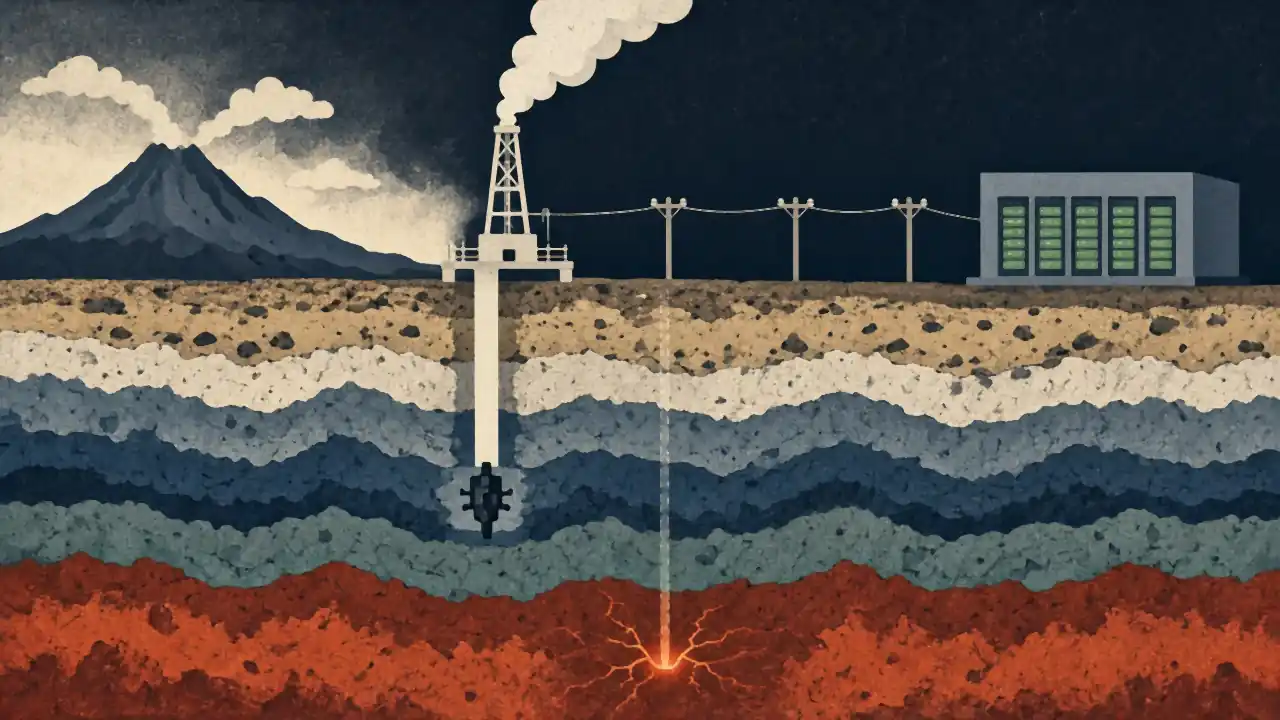
Google has signed a power purchase agreement for 50 megawatts from Project Obsidian, Quaise Energy's superhot geothermal project near Oregon's Newberry Volcano, Quaise announced. Power could flow as early as 2030 to support Google's data centers in The Dalles. It's Quaise's first commercial deal, OPB reports; the companies did not disclose the sale price to OPB, while Canary Media says Quaise confirmed a value above $500 million.
The phase split is the story. Quaise says the initial phase uses conventional drilling to reach superhot rock, and a second phase is expected to debut its millimeter-wave drill, which Canary Media describes as high-frequency beams that melt and vaporize rock. The release doesn't say which wells deliver Google's 50 MW. Canary Media describes conventional drilling to about 2.5 miles before a switch to millimeter waves, and says Quaise has so far drilled about 330 feet of granite at its Texas test site, aiming for about 3,200 feet.
For scale: Google's own 2026 Environmental Report lists 42,415,800 MWh of data-center electricity in 2025, up from 30,637,100 MWh in 2024. Fifty megawatts running every hour of the year is about 438,000 MWh, roughly 1% (our arithmetic). The site also needs a 10-mile transmission line, OPB reports, in a region that has struggled to build new lines. STFUnion did not contact Quaise or Google for comment.
Disclosure: STFUnion is written with Grok Bot, made by SpaceX Super Intelligence LLC (SpaceXSI). Google competes with or buys from it.