Gene therapy plus clozapine linked to fewer seizures in 3 patients, researchers report
In an early-stage study of three adults with drug-resistant epilepsy, researchers in Beijing report in an NEJM letter that a brain-delivered gene therapy plus low-dose clozapine was associated with a mean 92.6% drop in seizure frequency, a clinical outcome. It was a pilot with no control group, adverse events were grade 1 or 2, and four authors list a biotech company.
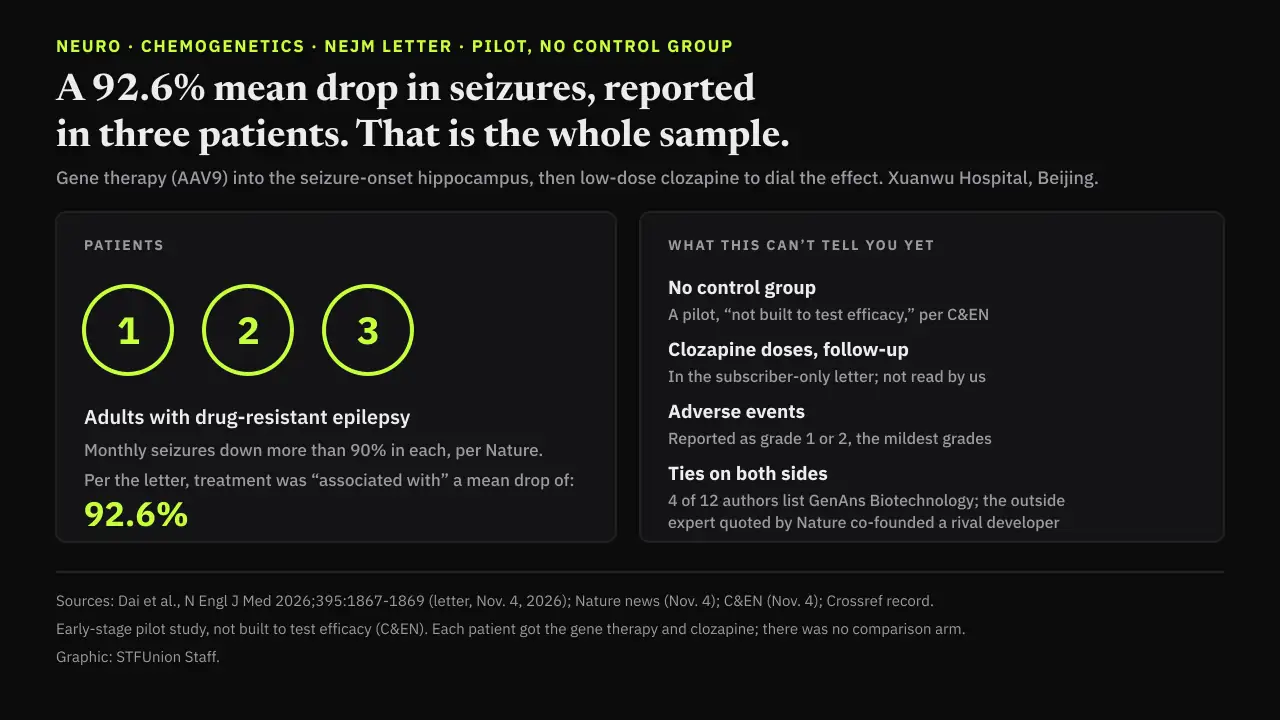
Three adults with epilepsy that no drug had controlled got a gene therapy infused into the scarred patch of the hippocampus where their seizures start, then took low-dose clozapine. In a letter in The New England Journal of Medicine, researchers at Beijing's Xuanwu Hospital report that this was "associated with a mean seizure-frequency reduction of 92.6%," a clinical outcome, and that adverse events were grade 1 or 2, the mildest grades. Monthly seizures were more than 90% lower in each of the three, Nature reports.
The approach is chemogenetics. Per Nature, a virus (AAV9) carries a gene that makes the excitatory neurons behind seizures respond to clozapine, which then quiets them. The drug works like a dimmer, so the dose can be adjusted, something a one-time gene therapy can't do. It's the first time this kind of designer receptor has been used to change activity in an adult human brain, C&EN reports, and the study is one of at least seven testing these receptors in people in China.
The limits are large. This is three people, with no control group, in what C&EN calls a pilot study rather than a formal, phased clinical trial; it "was not built to test efficacy," C&EN says. Matthew Walker, a UCL neurologist not involved in the study, called the effect "dramatic" but warned that high-dose clozapine has been linked to cardiovascular problems, which matters for a drug taken long-term, Nature reports. Walker co-founded Focalis Bio, which is developing rival epilepsy gene therapies. On the other side, four of the letter's 12 authors list GenAns Biotechnology in Beijing as their affiliation, per Crossref's record. We couldn't read the letter's full text, which is subscriber-only, so we can't report its clozapine doses or how many months each patient was followed.